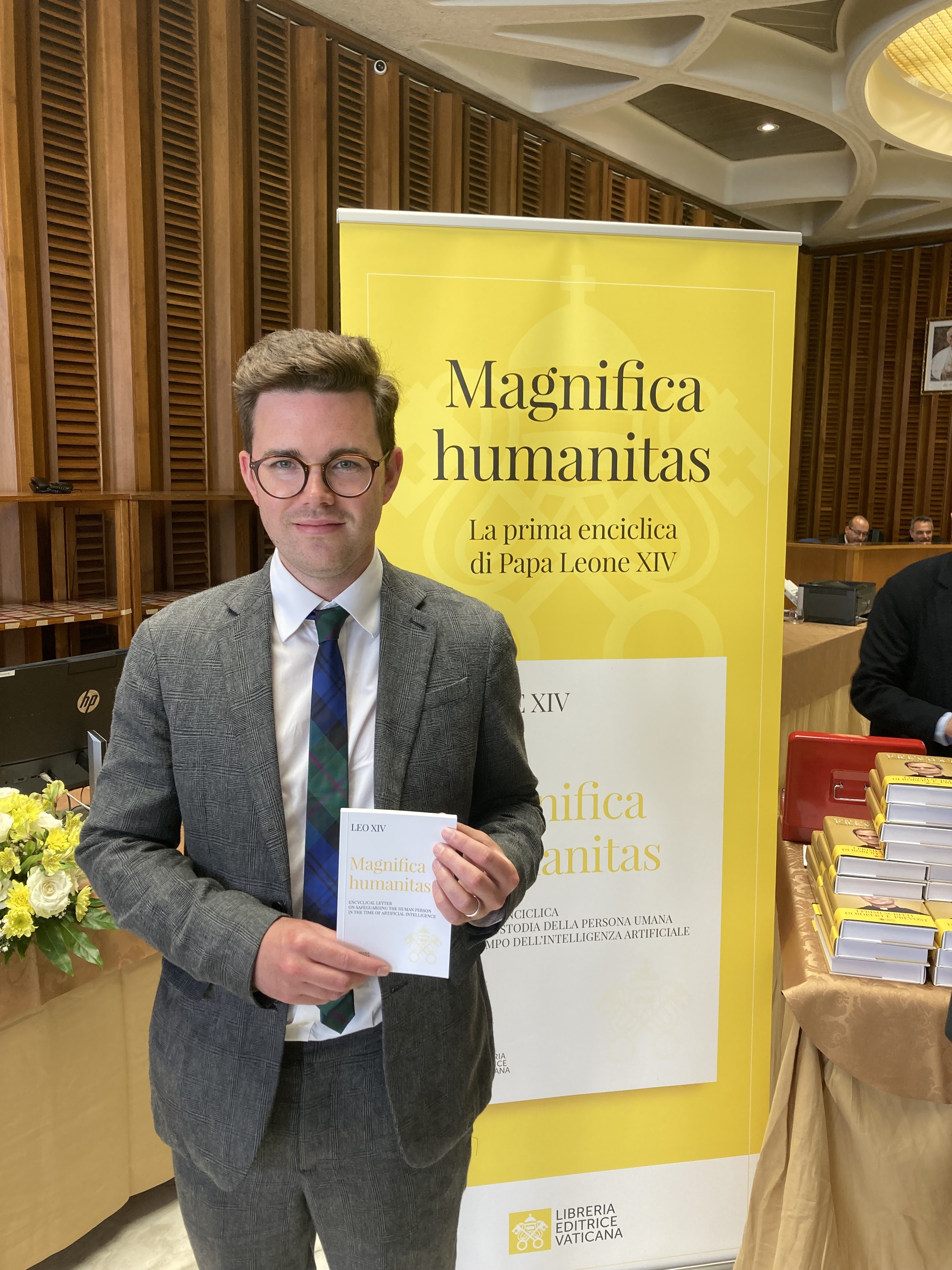
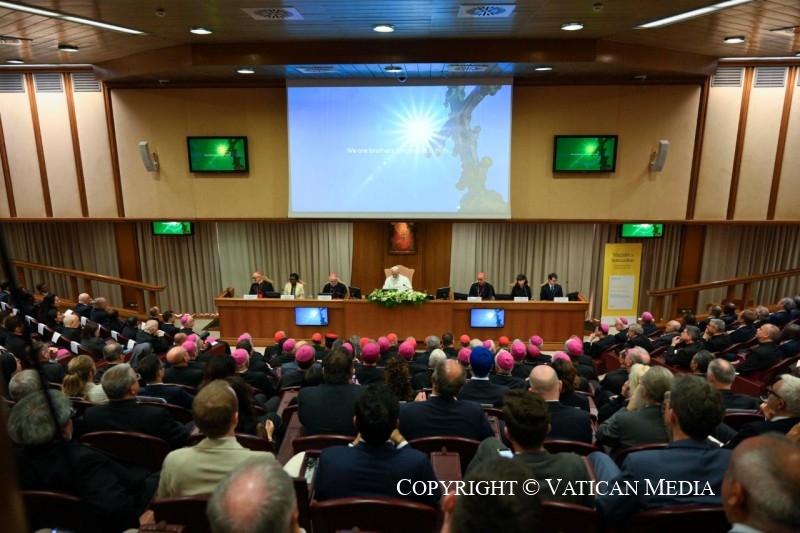
On Monday 25 May, Pope Leo XIV released his first encyclical letter, Magnifica humanitas, a major teaching document exploring the implications of artificial intelligence for human dignity, social life, and the common good. The launch took place in the Vatican's Synod Hall and was attended by scholars, church leaders, and policymakers from around the world. Among the invited guests was Dr Samuel Tranter of the Faculty of Theology and Religion, whose ongoing research aligns closely with the themes explored in the Pope’s encyclical.
Reflecting on the occasion, Dr Tranter has written about both the launch and the significance of the encyclical in an article for The Times, published on Saturday.
In the coming months, he will be speaking at a number of events examining the relationship between human dignity, emerging technologies, and the common good. He will also host a roundtable discussion at Oxford's McDonald Centre for Theology, Ethics, and Public Life, bringing together scholars and practitioners to explore the encyclical's key arguments and their significance for contemporary society. The Centre’s2027 annual conference, to be held at Christ Church from 10–12 June 2027, will focus on ‘AI, Christian Humanism, and Political Economy’.
Dr Samuel Tranter is McDonald Postdoctoral Fellow in Christian Ethics and Public Life. Further information about the Centre's work on Political Theology, Emerging Technologies, and Common Life can be found on the McDonald Centre's website.