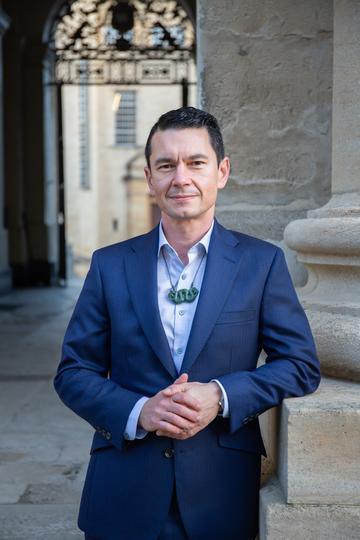
Dr Lyndon Drake, Research Fellow in AI at the Ian Ramsey Centre, University of Oxford and a researcher on the Oxford Collaboration on Theology and Artificial Intelligence (OCTAI) project, appeared on BBC News on 25 May following the release of Pope Leo’s first encyclical of his papacy, which warned of the dangers of artificial intelligence and called for stronger ethical oversight of the technology. Earlier in the day he was also interviewed on Radio 4's 'World at One' programme.
The encyclical addresses the growing influence of artificial intelligence on society, work, and human relationships, while calling for the responsible development and governance of emerging technologies.
Speaking on the BBC News channel’s Business Today programme, Dr Drake reflected on the encyclical’s themes of human dignity, technological change, and the moral responsibilities surrounding AI development.
Discussing the Pope’s distinction between human dignity and human abilities, Dr Drake said that while AI may replace some human capabilities, it cannot replace human worth:
“Capabilities might be replaced, but dignity and humanity can’t be replaced by AI.”
He also highlighted the encyclical’s wider reflection on the role of technology in shaping human life:
“Our tools have always been able to do things that we can’t. That’s why we use them. And when they do, they replace something — and there could be some loss, but there’s always a gain as well.”
Dr Drake explained that the document draws on a long theological tradition concerned not only with what technologies can do, but with how they shape human beings and society.
In both interviews, he also discussed the challenges of developing ethical AI systems and the importance of human judgement, discernment, and responsibility in guiding emerging technologies.